

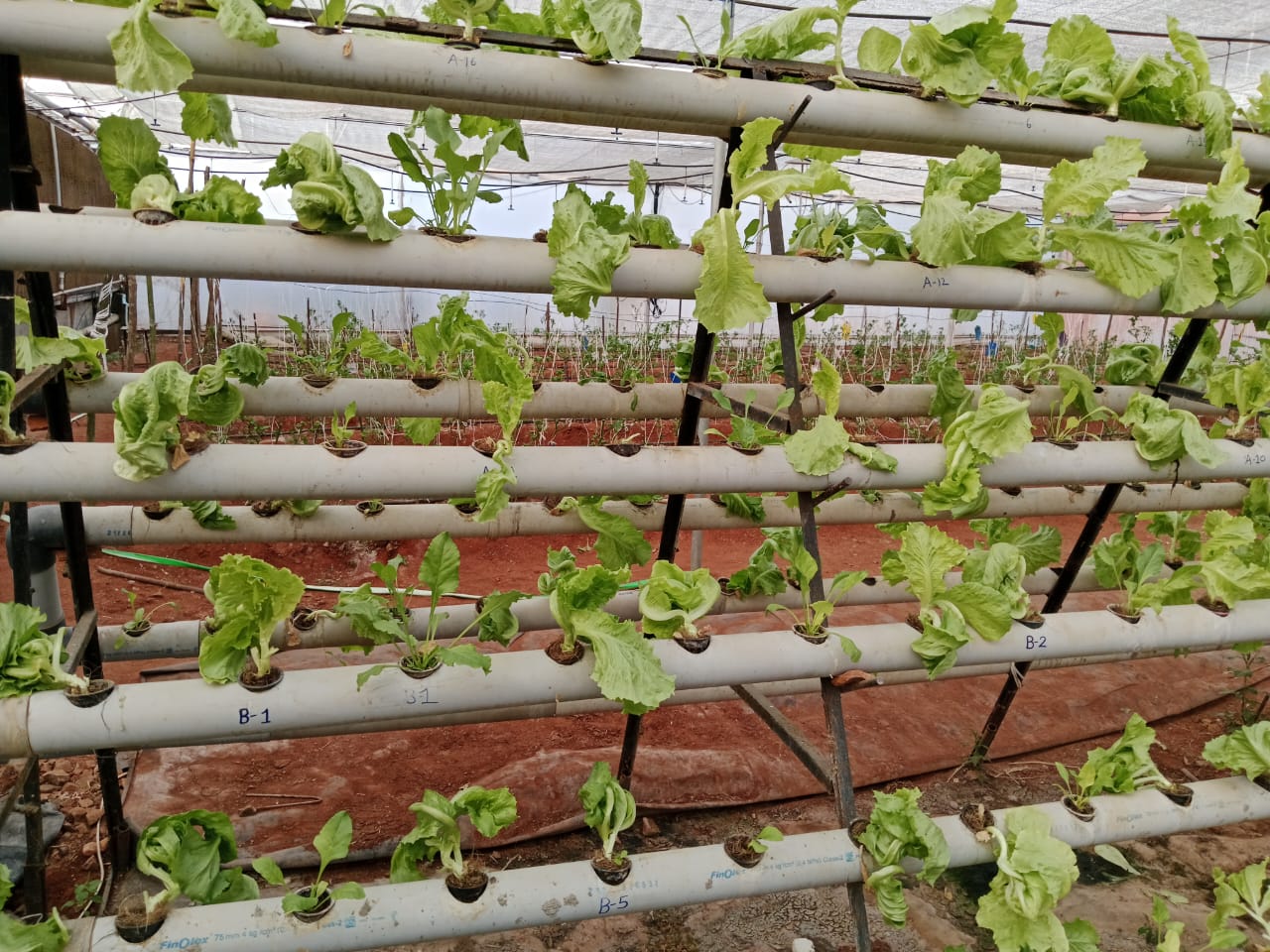
A decade ago, vertical farming was the future rendered in magenta light: towers of salad leaves growing without soil, seasons or pesticides, stacked in warehouses near the cities that would eat them. Then came the electricity bills, the bankruptcies and the hard questions. Now a leaner, more honest version of the industry is emerging — one whose economics are finally being tested in daylight rather than in pitch decks.
The basic trade has never changed. Growing indoors surrenders free sunlight and pays for every photon with electricity, in exchange for control: no droughts, no floods, yields per square metre that field farming cannot approach, and water use cut by ninety per cent or more. Whether that trade pays depends almost entirely on the price of power and the value of the crop, which is why the survivors overwhelmingly grow herbs, salads and strawberries rather than wheat.
What the Shake-Out Taught
The failures of recent years were instructive. Several celebrated start-ups expanded across continents before proving a single site could make money, burning capital on automation that solved the wrong problems. Labour for harvesting turned out to matter less than energy for lighting; a few pence per kilowatt-hour separated profit from loss. The Food and Agriculture Organization has long noted that controlled-environment agriculture has a role in food security, but a role defined by economics rather than enthusiasm.
The operators still standing tend to share habits: they site farms beside cheap or surplus renewable power, sell into contracts rather than spot markets, and automate the repetitive middle of the process — seeding, moving, monitoring — while accepting that some jobs stay human. Growing recipes, the precise choreography of light, humidity and nutrition, have become closely guarded trade secrets, refined crop by crop.
Where the Model Genuinely Wins
Context decides everything, as coverage in The Guardian’s environment section has emphasised. In water-scarce regions, in northern cities importing salad by air in winter, and on islands dependent on shipped food, vertical farms compete against expensive, carbon-heavy supply chains rather than against a local field in June. Gulf states and Singapore, both exposed on food imports, continue to invest for strategic as much as commercial reasons.
Hybrid models are also gaining ground: greenhouses that use sunlight when it is available and LEDs to extend the day, farms that begin seedlings indoors for transplanting outside, and rooftop operations that share a building’s waste heat. Purists may object, but each hybrid concedes the same point — free photons are too valuable to refuse.
A Niche, and a Real One
For a site devoted to the ground beneath our feet, the story holds a certain irony, and it is one we explore at YvanTurf alongside our usual turf and land coverage in the Daily Tips section: the farm of the future may have no soil at all, yet its fate still turns on the oldest variables in agriculture — energy, water and the price a buyer will pay.
Research is quietly widening the repertoire. Breeders are selecting dwarf varieties suited to stacked layers, engineers are cutting LED costs with every generation of fixtures, and trials are testing whether young plants started indoors can give field crops a head start against weeds and weather. Mushrooms and insect protein, which need no light at all, are finding homes in the same facilities. Each experiment chips away at the original objection — that controlled-environment farming works only for a short list of leafy luxuries — even if staple crops remain, for now, firmly outdoors where the sunlight is free.
None of this spells the end of field farming, which will feed the world for the foreseeable future at a cost per calorie no warehouse can match. What the shake-out has produced is clarity. Vertical farming is not a replacement for agriculture; it is a precision tool for particular crops, climates and cities. That is a smaller claim than the one made a decade ago — and, for the first time, a defensible one.
