

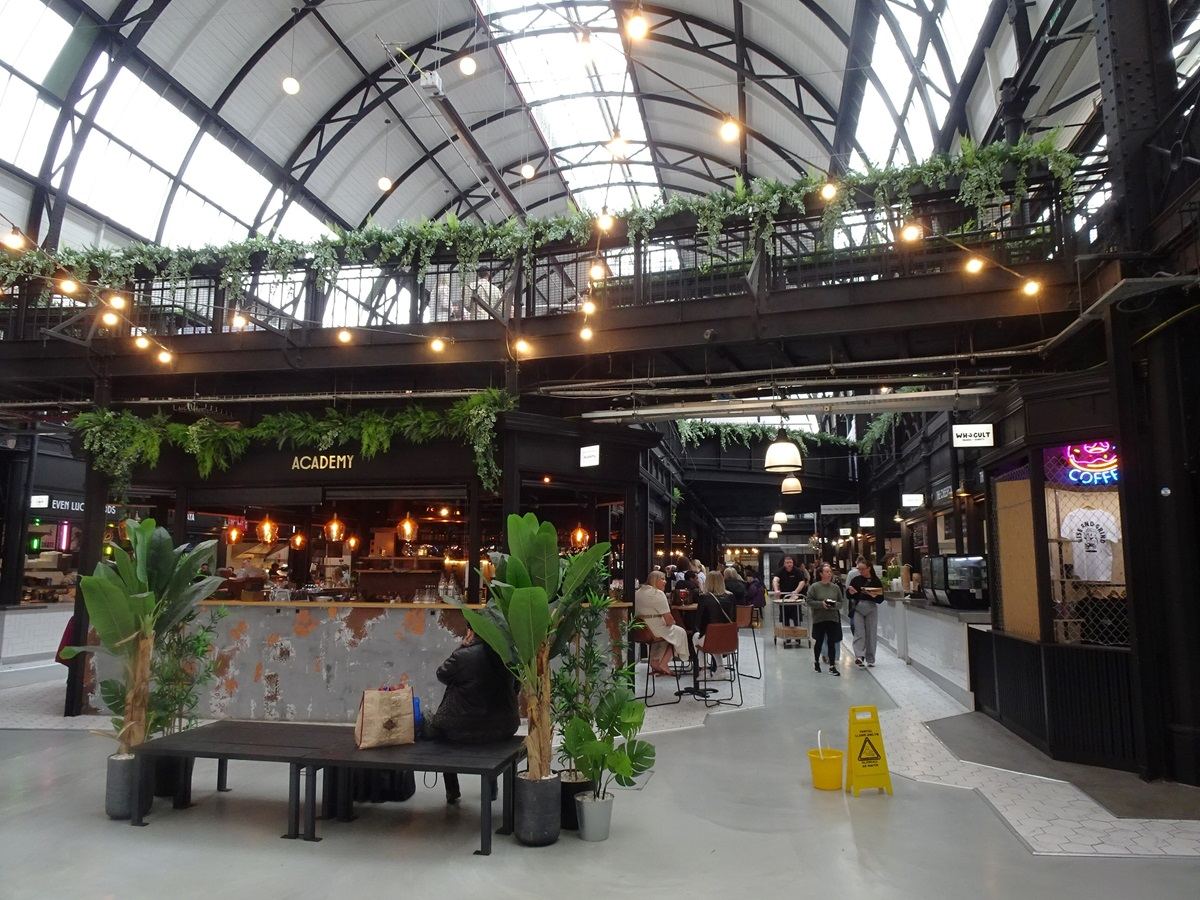
Renovated indoor market halls are drawing shoppers back into town centres that have struggled since large stores closed. The revived halls mix traditional butchers, bakers and repair stalls with street-food counters and small start-up units on short, affordable leases. Traders say the variety creates a reason to visit that no single shop can match, and lunchtime crowds now spill into surrounding streets. Councils backing the renovations argue that markets anchor footfall for nearby independent businesses too. Rents are kept graduated, rising as new stalls establish themselves, to stop the halls becoming exclusive food destinations.
What the Evidence Shows
Long-standing traders were involved in the redesigns, pressing for practical details such as storage, loading space and affordable stall fees over decorative features. Market managers say events, cookery demonstrations and evening openings are planned carefully so they support trading rather than turning the hall into a venue that happens to contain stalls. Early footfall counts are encouraging, but traders judge success by regular weekly customers, not opening-weekend crowds. The real test will be winter trading. If the halls hold their audiences then, they may offer a repeatable model for other towns. Reporting and analysis from sources such as Associated Press track the same developments, and specialists following renovated market halls anchoring towns say the direction is now consistent across independent lines of evidence.
The Wider Context
Regional and local reporting on renovated market halls anchoring towns often tells a different story from national coverage, because the effects land unevenly: one town’s pilot is another’s distant proposal. Analysts who follow the subject full-time read the local data first, arguing that national averages conceal the variation that decides whether a policy or a project deserves to spread.
What Happens Next
The longer story of renovated market halls anchoring towns is still being written by the people closest to it, whose experience rarely matches the earliest predictions of either supporters or critics. Reporting will continue to follow the evidence as it accumulates, including where it complicates today’s account. That is the deal serious coverage makes with its readers, and it holds for this subject as for any other. You can follow related developments in our coverage of news.
It is also worth remembering how quickly the picture in this area has changed before. Positions that looked settled a few years ago have been revised as new data arrived, and the same humility is appropriate now. The strongest coverage of this subject, and the most useful advice, tends to come from sources that update their views openly when the facts move, rather than defending an earlier position long after it has stopped fitting the evidence available.
None of this will be settled by a single announcement, study or product launch. The pattern to watch is accumulation: independent confirmations, honest reporting of failures and steady improvement in the underlying numbers. Readers who follow those signals, rather than the loudest claim of the week, will understand this subject better than most of the commentary surrounding it suggests is possible.
